One perfect moment of summer, long ago, in a field of golden wheat, a boy drove his dad’s combine alone.
The brand-new combine!
It was 1967. The boy was 12. He felt confident at the controls. It wasn’t the first time he’d run a combine alone – just the first time running the new one.
He looked at the good land. He looked at the good wheat. The blue Nebraska sky. Everything in that moment seemed to flow, and a thought made its way into his heart:
This is what I want to do.
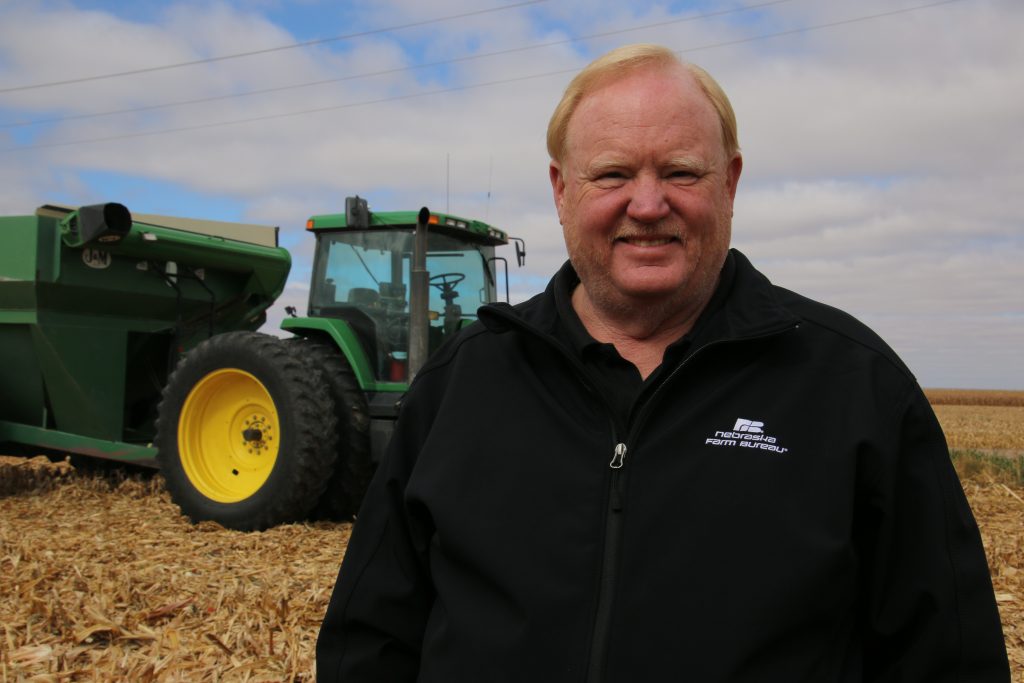
“It just struck me right then – life can’t get much better than this.”
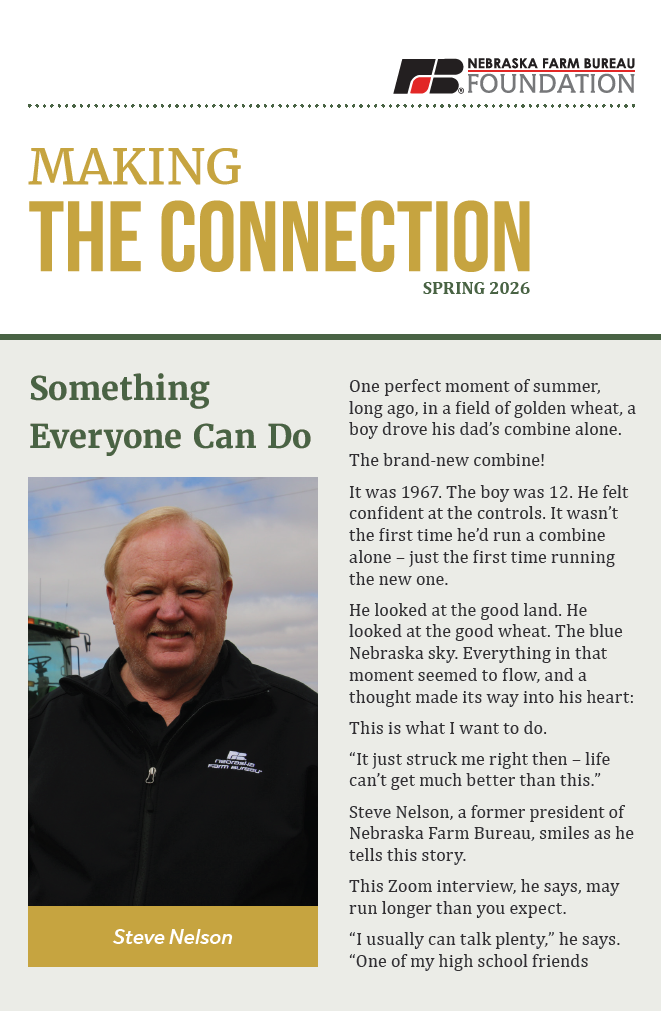
Steve Nelson, a former president of Nebraska Farm Bureau, smiles as he tells this story.
This Zoom interview, he says, may run longer than you expect.
“I usually can talk plenty,” he says. “One of my high school friends said – after I became Farm Bureau president – ‘I always knew Steve would do something that involved talking!’”
It’s a trait that helped him in his role with Farm Bureau, talking with farmers and ranchers across
the state, speaking up for them and their grassroot issues. It’s a trait he’s happy to use now, he says, to promote the Nebraska Farm Bureau Foundation.
The Foundation’s mission – telling the Nebraska agriculture story to schoolkids, supporting their
teachers, engaging people across the state – is important. So many Nebraskans now are generations removed from the land, yet everyone is affected by the state’s agricultural economy.
He grew up on the family farm near Axtell, in Kearney County, on the land his great-great grandpa homesteaded in 1878. An aerial photo of a farm hangs on the wall behind him. It’s the farm he bought as a young man out of college. That’s where he lives now with his wife, Elma. It’s where they raised their kids: Scott, Sarah, and Stacy. It’s not far from that old homestead, which is still in the family.
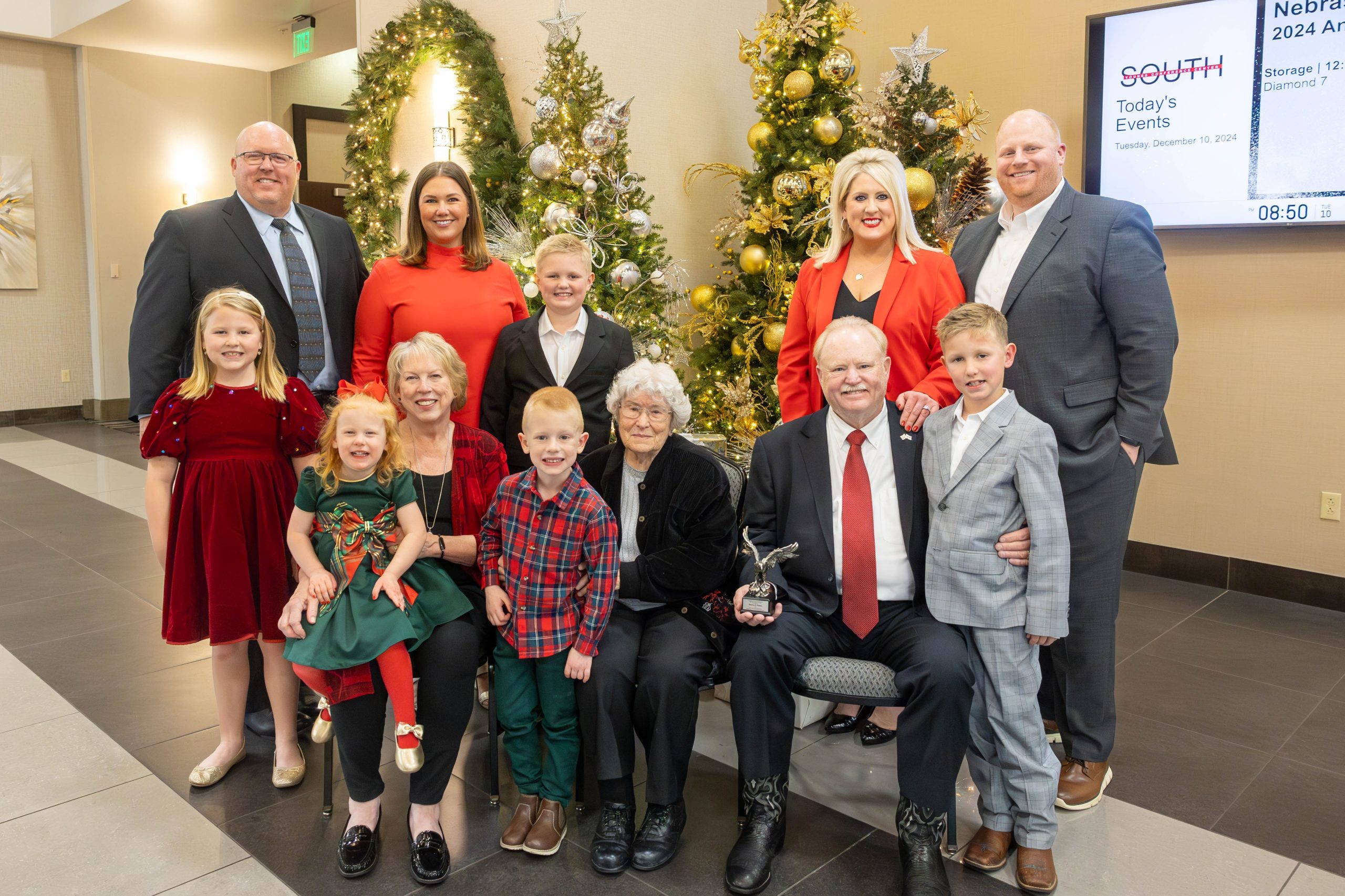
mother, Shirley Ann, after accepting the Nebraska Farm Bureau Silver Eagle Award in 2024.
The generations who came before him, Steve says, were people of deep faith – a trait he shares. His faith helped pull him out of a deep hole, about two decades ago, when the
worst storm you can imagine struck his family.
You expect parents and grandparents to go before you, he says.
Not your kids.
Sarah was their youngest child. She was a cheerleader. A writer. A lover of history and English. She loved to edit his Farm Bureau speeches.
“She’d say, ‘I don’t know what you’re talking about, but it sounds good. She was a sweetheart. I could go on and on about her.”
Sarah had been born with hip dysplasia. Just before her final year of college, Steve’s wife Elma traveled with Sarah to the Mayo Clinic for a second surgery. The first one went well. The second one went well, too, but two days later, something went wrong.
“The doctor who saw her last, he told us, ‘She waved and told me to have a great day.’”
At the time, he says, they knew they had to move forward, even though they wanted to crawl in a hole.
But there was a silver lining.
The summer before Sarah died, she and her mom had watched a movie together. In that movie, a dying girl donated her organs so someone else could live. Sarah told her mom, “if anything ever happens to me, give them everything. This is what I want to do.”
Soon, a young mother from Wisconsin was breathing through Sarah’s lungs. The woman had twins, a boy and a girl.
“She got to live to see her children grow up, all because of Sarah’s lungs.”
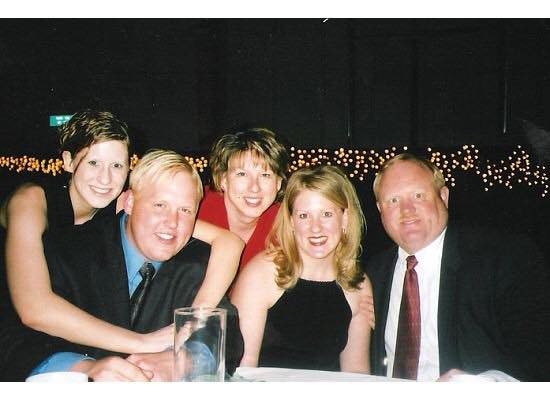
Steve was about Sarah’s age when he first became involved with Farm Bureau.
With a degree in agriculture under his belt, he went to the county fair and struck up a conversation with one of his dad’s friends at the Kearney/Franklin County Farm Bureau booth.
The man was on the board. He encouraged him to get involved.
Steve began on the county board, serving five years before joining the legislative policy committee. He was later elected to the state board, served four years as first vice president, and then was elected president of Nebraska Farm Bureau, a role he held for nine years until retiring in 2020. He saw Nebraska Farm Bureau’s impact on the state.
He saw the impact of its Foundation, too.
Maybe now more than ever, he says, in a world where “fads” often replace “facts” when government officials talk about agricultural issues, it’s important to help the Foundation keep telling the true story of agriculture – using both using both science and common sense.
That is why he and his wife are pleased to include a gift to the Foundation in their wills.
“We’re not talking huge amounts of money. I think it’s just something everyone can do, and certainly, we encourage others to do, as well.”
“We stand on the shoulders of those who came before us and helped us,” he says, “and we believe it’s our duty to leave something for the next generations of the state, as well as for our children.”
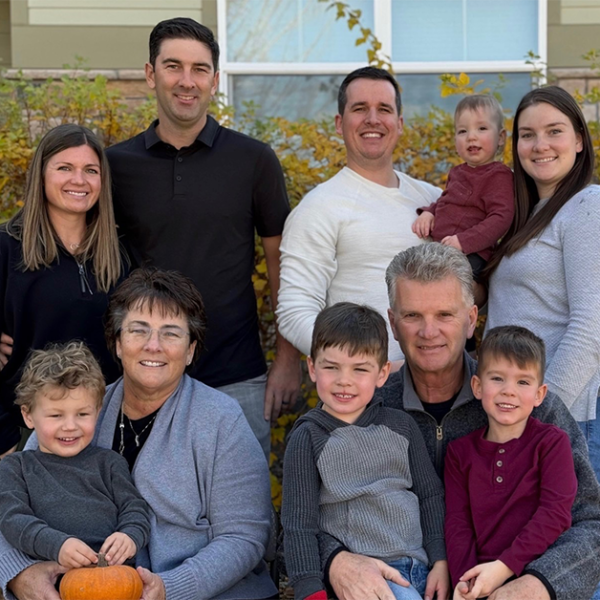
Son Scott has three children. He built a house across from the old homestead. Daughter Stacy lives in Ashland, Nebraska, and has two children. Steve thinks maybe some of those grandkids will farm someday.
They’d be the seventh generation.
“Scott runs the show now. I tell him, ‘I want to keep helping, as long as I’m not wrecking stuff!’”
Scott still lets him run the combine.
On some perfect days, alone in the combine, he looks back at his life and sees a boy.
This is what I want to do.
“A lot of times, I don’t think of myself as being 70 years old and sort of retired. I still sometimes think – when I’m out in the field – that I’m that boy again.”
“She’d say, ‘I don’t know what you’re talking about, but it sounds good.’ She was a sweetheart. I could go on and on about her.”
Sarah had been born with hip dysplasia. Just before her final year of college, Steve’s wife Elma traveled with Sarah to the Mayo Clinic for a second surgery. The first one went well. The second one went well, too, but two days later, something went wrong.